




Background
Somalia remains one of the countries with the highest number of zero-dose children globally. As of 2024, the World Health Organization (WHO) and the United Nations Children’s Fund (UNICEF) estimated over one million zero-dose children nationwide. In Garowe, the capital of Puntland State, measles and diphtheria outbreaks were attributed to low immunization coverage, especially among internally displaced persons (IDPs) and urban poor communities. Garowe hosts over 200,000 residents, including a significant IDP population, many of whom have little access to routine health services.
The country’s fragile health system shaped by years of conflict, recurring displacement, and chronic underfunding continues to constrain the delivery and accessibility of essential health services, including routine immunization. Cultural barriers, weak infrastructure, and inconsistent health worker availability further limit outreach and service uptake. In this context, reaching zero-dose children those who have not received even a single dose of routine vaccines remains an urgent priority for both national health authorities and international partners committed to improving child survival and public health outcomes in Somalia.
To understand where improvements can be made, Khaliif Abdullahi Nouh, Immunization Specialist with the Federal Ministry of Health, deployed “Reaching Zero Dose Children in Garowe, Somalia” through the second cohort, spanning April 3 to May 8, 2024, of Sabin and the World Health Organization’s COVID-19 Recovery for Routine Immunization Fellowship Programs.
Objectives
- Reduce the number of zero-dose children in Garowe IDPs and urban areas
- Increase coverage of scheduled childhood vaccines
- Reach defaulters and support completion of vaccine schedules
- Decrease morbidity and mortality from vaccine-preventable diseases (VPDs)
Implementation Strategy
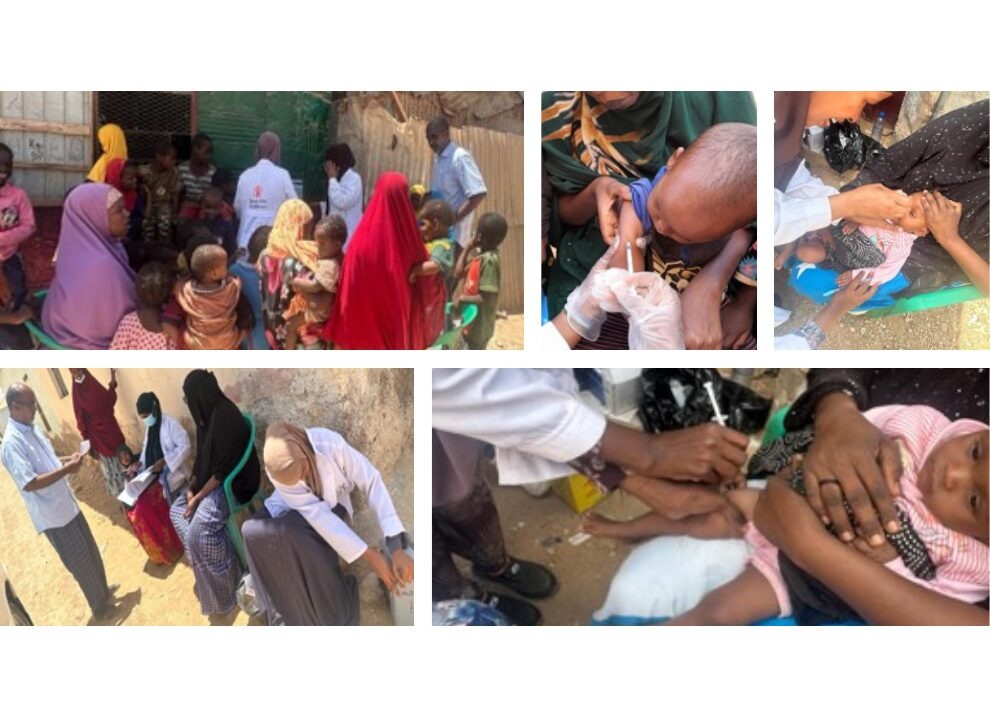
With support from the Fellowship program and collaboration with the Puntland Ministry of Health, three rounds of outreach immunization were conducted between February and May 2024. Six outreach teams each comprising two vaccinators, a social mobilizer, and a recorder were deployed across six high-need sites in Garowe. Sites were selected based on the prevalence of VPDs and the concentration of zero-dose children.
During the selection of the six sites, priority was given to areas already identified as high zero dose children and locations with the reported VPDs, and then identified six health centers in Garowe city to conduct the outreach services, including Gambool, Jowle, Barwaaqo, Gargaar, Waaberi, and Badbaado health centers.
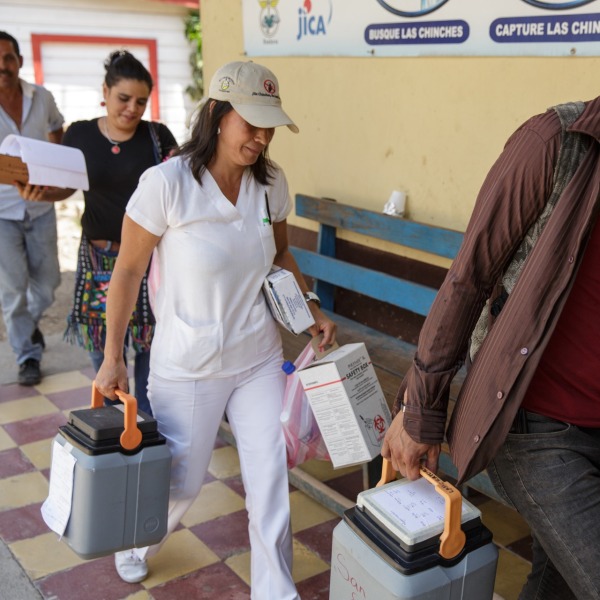
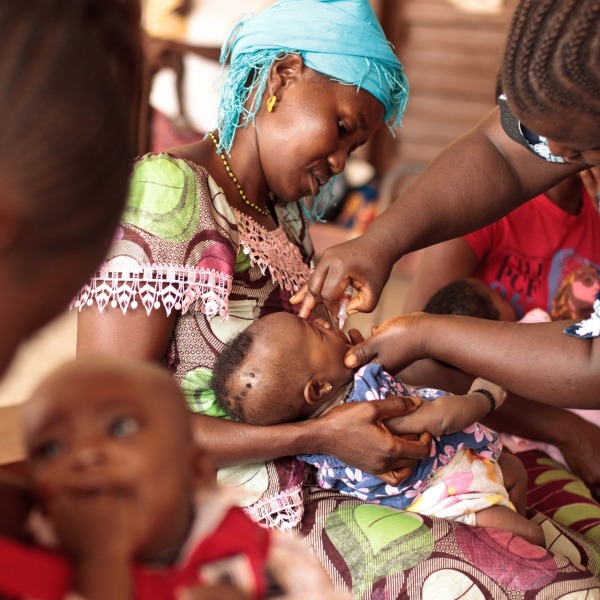
The teams provided all the scheduled vaccines and used temporally fixed sites, where the teams were moving frequently from one location to another. Each team consisted of four members including two vaccinators, one social mobilizer, and one recorder, and the social mobilizer was frequently visiting the nearby houses to inform the parents about the outreach activities and encourage them to immunize their children.
Two supervisors were also supporting the teams during the outreach days and all the teams were trained during the first round by the Ministry of Health and one HMIS person who combined the data from the teams then shared on daily basis.
Each round lasted five days, with teams using temporary fixed sites and door-to-door communication. Social mobilizers informed nearby households and encouraged caregivers to bring children for vaccination. Vaccines provided included Pentavalent (Penta), Inactivated Poliovirus Vaccine (IPV), Measles-Containing Vaccine (MCV), and Tetanus-Diphtheria (Td). Vitamin A supplementation was integrated throughout. Supervisors and a Health Management Information System (HMIS) officer supported daily data reporting and coordination.
Challenges and Adaptations
The primary objective of this proposal was to reduce the number of zero-dose children among target regions by 25%, increase the immunization coverage of all the scheduled antigens in nine months, and protect against the spread of the prevalence of VPDs. The secondary objective was to address immunization bottlenecks, contribute to the improvement of the general public health services, and facilitate the overall well-being of Somali people through reduced morbidities and mortalities.
Initial plans to implement in six regions were scaled back to Garowe due to limited funding. Delays in fund transfers pushed activities from February to April and May, requiring timeline adjustments. Despite this, the number of zero-dose children reached (1,743 for Penta-1) exceeded the original target (700). The Ministry of Health co-funded the first round, allowing Sabin’s support to cover two additional rounds.
Outcomes and Impact
-
Pentavalent vaccination (three outreach rounds):
-
PENTA1: 1,743 children
-
PENTA2: 1,933 children
-
PENTA3: 1,957 children
Note: Higher PENTA2 and PENTA3 numbers reflect successful identification and follow-up of defaulter children who had received PENTA1 at health facilities but had not returned to complete their doses.
-
-
Other childhood vaccinations:
-
IPV1: 1,550 children
-
IPV2: 526 children
-
MCV1: 1,600 children
-
MCV2: 1,373 children
-
-
Maternal tetanus-diphtheria (Td) vaccination:
-
Td1: 551 mothers
-
Td2: 336 mothers
-
Td3: 320 mothers
-
Td4: 196 mothers
-
Td5: 154 mothers
-
-
Vitamin A supplementation:
-
Integrated across all three outreach rounds
Total children reached: 2,230
-
The project significantly increased immunization coverage in high-risk communities within a short period, with minimal refusals reported. The number of children completing full immunization schedules steadily rose with each round, demonstrating the effectiveness of the repeated outreach approach. Additionally, the inclusion of Vitamin A supplementation and Td vaccines for women further enhanced the program’s broader public health impact. These gains not only addressed immediate coverage gaps but also laid a foundation for future routine immunization integration in underserved areas.
Lessons Learned
- Partnerships matter: The Ministry of Health’s involvement was essential to implementation success
- Female-led outreach: 96% of outreach personnel were women, which improved community acceptance
- Integrated services work: Combining Vitamin A supplementation with immunization improved efficiency
- Demand is growing: Community response indicates rising interest in immunization, partly due to health promotion and outbreak awareness
- Stakeholder engagement is key: Involving local leaders and partners during planning and implementation supports sustainability
Recommendations
Building on this success, the fellow and partners plan to:
- Support national efforts to reach 1.5 million zero-dose children through expanded outreach and mobile strategies
- Introduce new vaccines like Pneumococcal Conjugate Vaccine (PCV) and Rotavirus Vaccine in Q3 2024
- Integrate COVID-19 vaccines into routine schedules
- Increase coordination with nomadic leaders to improve microplanning and reach mobile populations
Conclusion
This initiative demonstrates the potential of focused, community-led outreach strategies to close the immunization gap in fragile settings like Somalia. By working in close coordination with local health authorities and leveraging community-based mobilization, the project ensured high levels of acceptance and participation. The experience from Garowe offers a scalable model that can inform future zero-dose strategies, particularly in areas affected by displacement and limited health infrastructure. With continued investment and collaboration, such efforts can significantly contribute to achieving equitable immunization coverage nationwide.
Recommended for you
OUR MISSION
We make vaccines more accessible, enable innovation and expand immunization across the globe.