Antibiotics, antivirals, antifungals, and antiparasitics are different types of anti-infective medications and have long been used to combat infectious disease. However, the growing threat of antimicrobial resistance (AMR) worldwide is undermining these once-reliable treatments.
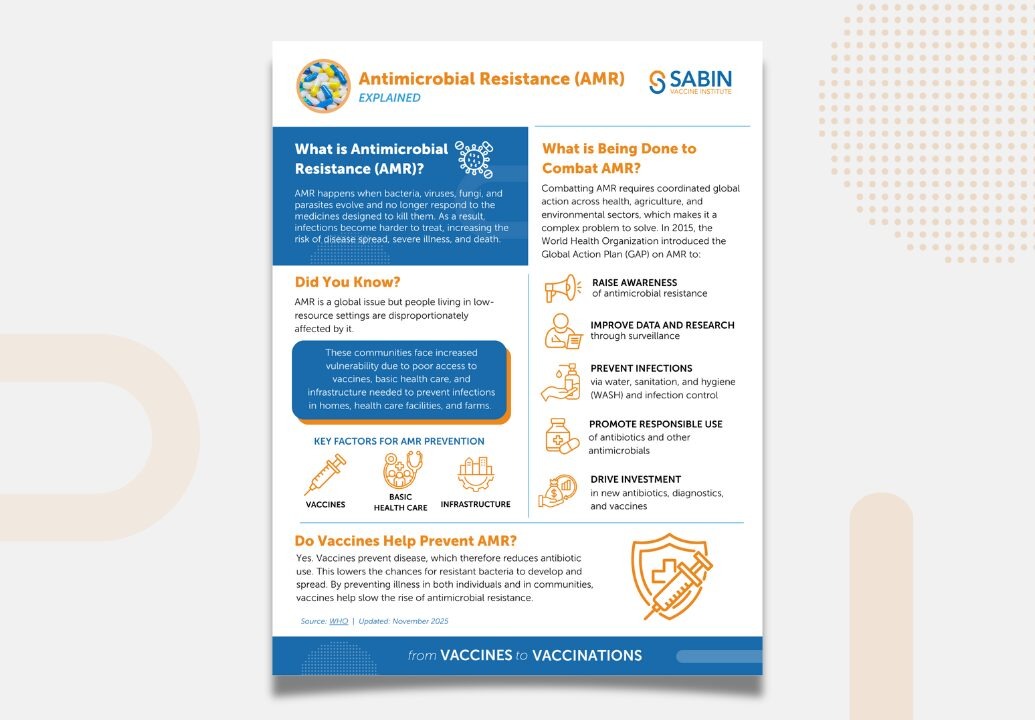
AMR happens when bacteria, viruses, fungi, and parasites evolve and no longer respond to the medicines designed to kill them. As a result, infections become harder to treat, increasing the risk of disease spread, severe illness, and death.
AMR is a global issue but people living in low-resource settings are disproportionately affected by it. These communities face increased vulnerability due to poor access to vaccines, basic health care, and infrastructure needed to prevent infections in homes, health care facilities, and farms.
Combatting AMR requires coordinated global action across health, agriculture, and environmental sectors, which makes it a complex problem to solve. In 2015, the World Health Organization introduced the Global Action Plan (GAP) on AMR to:
As of November 2023, 178 countries had developed AMR national action plans aligned with the GAP.
Yes. Vaccines prevent disease, which therefore reduces antibiotic use. This lowers the chances for resistant bacteria to develop and spread. By preventing illness in both individuals and in communities, vaccines help slow the rise of antimicrobial resistance.
OUR MISSION
We make vaccines more accessible, enable innovation and expand immunization across the globe.
We use cookies to improve your browsing experience
By clicking “Accept”, you consent to the use of all cookies. Read More
| Cookie | Duration | Description |
|---|---|---|
| cookielawinfo-checkbox-analytics | 11 months | This cookie is set by GDPR Cookie Consent plugin. The cookie is used to store the user consent for the cookies in the category "Analytics". |
| cookielawinfo-checkbox-functional | 11 months | The cookie is set by GDPR cookie consent to record the user consent for the cookies in the category "Functional". |
| cookielawinfo-checkbox-necessary | 11 months | This cookie is set by GDPR Cookie Consent plugin. The cookies is used to store the user consent for the cookies in the category "Necessary". |
| cookielawinfo-checkbox-others | 11 months | This cookie is set by GDPR Cookie Consent plugin. The cookie is used to store the user consent for the cookies in the category "Other. |
| cookielawinfo-checkbox-performance | 11 months | This cookie is set by GDPR Cookie Consent plugin. The cookie is used to store the user consent for the cookies in the category "Performance". |
| viewed_cookie_policy | 11 months | The cookie is set by the GDPR Cookie Consent plugin and is used to store whether or not user has consented to the use of cookies. It does not store any personal data. |